



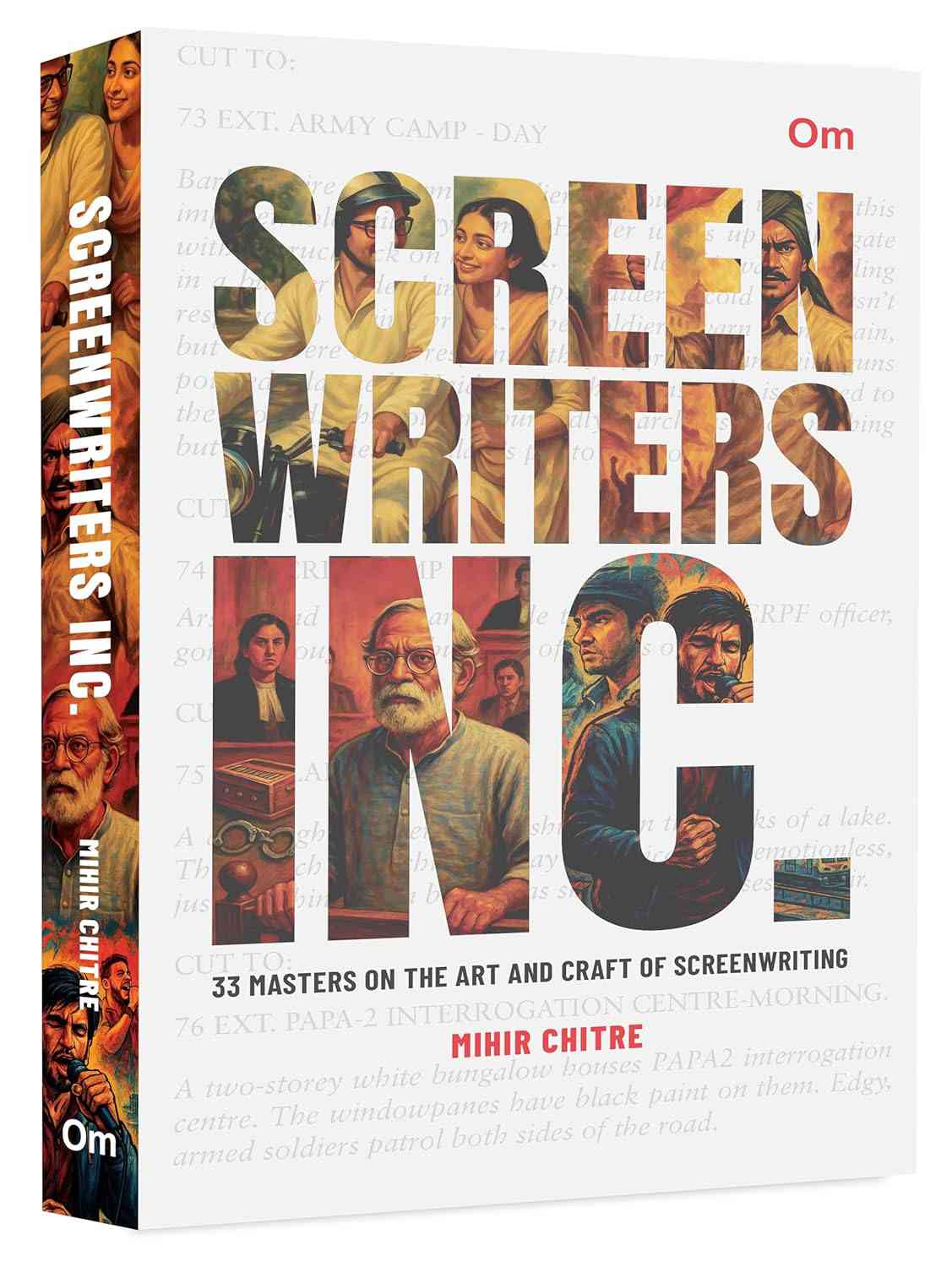
In Screenwriters Inc., Mihir Chitre interviews 33 directors and writers of films and web series, such as Sai Paranjpye, Anjum Rajabali, Abhishek Chaubey and Sita Menon. Here are edited excerpts from Chitre’s conversation with Imtiaz Ali, the writer-director of the films Socha Na Tha, Jab We Met, Rockstar and Amar Singh Chamkila and the co-creator of the show She.
How did your idea of art change from Jamshedpur to Delhi and then from Delhi to Bombay?
I think it changed a lot. And that has to do with the kind of theatre I was involved in – not just as a writer but as an actor or a director as well.
When I was in Jamshedpur, we were doing archaic English theatre. We were trying to enunciate old English and get that dialect in. That’s the kind of theatre that has a lot of rules like an actor’s shoulder blade shouldn’t cut the line of the audience or an actor should never show his or her back to the audience. Till the time I was in Jamshedpur, even my writing was like that because I was writing for, let’s say, that mentality. Flowery, maybe a bit high-brow, and only in English.
One of the biggest things Delhi did for me was introduce me to experimental theatre. This is also when I started writing in Hindi. Although Hindi is what we always spoke at home, till the time I went to Delhi, I always wrote in English. I still think in English.
At Mandi House, I started doing experimental Hindi plays. Now the shoulder blade could cut the line of the audience, I could have an actor showing their back to the audience. Experimental theatre is more liberal and open. It also has rules of its own but it allowed me more freedom. I also started writing and directing nukkad natak (street plays).
Delhi became an important city for me also because Delhi is a rough city. It attacks you. And you tend to hit back. And the age I was – early college days – there was a roughness. So, I found an expression in the city.
In fact, when I came to Mumbai, almost all my stories were from my time in Delhi. For example, Highway is one of my early stories. Originally, the script was much harsher than the way I made it. I had that story since the 1990s. Maybe since 1996-1997. Then in Bombay, I wrote a play when I was at Xavier’s Institute of Communication which at that point, as a theatre person, I was very proud of.
How important is a lived experience for the writer in you?
I think my take-off point is lived experience. But nothing is autobiographical either. You can say, for me, it starts with lived experience and then takes a flight of imagination.
For example, Jab We Met. Now, a girl on a train. This is a fantasy for any guy who travels by train from Jamshedpur or any small town. Mix this imagination: What if she and I were to miss a train together? Then we might be walking down the lanes of Ratlam.
This is how the story started unfolding. That never happened in reality. Unfortunately, I never missed a train with a girl. But it started because I must have seen a girl on a train in my early days. The reality is the trigger; the rest is imagination.
Tell me about your television days in the 1990s. Especially Star Bestsellers. I don’t think shows like that are made any longer.
I agree. Unfortunately, shows like Star Bestsellers aren’t made any longer. All of us wanted to make films. At that time, the difference between a TV story and a film story wasn’t as clear as it is today.
I made one film for Star Bestsellers called Witness. It was a great opportunity for someone like me to tell a finite story, with a definite beginning, middle, and end. Otherwise, the other TV shows that I was working on, like Imtihaan, were endless sagas.
For instance, in Witness, I went crazy recording sounds from the atmosphere. That’s when I realized the importance of ambient sounds. Television was very important to my journey because it taught me to write quickly and shoot quickly. I think TV is the only film school I ever went to.
How easy or difficult was it to pitch your first film Socha Na Tha? Could you talk about that journey?
I had been writing and directing television for years. When I was working on Bestsellers, that was for Star. So, the team there approached me one time and said that they were working on a new segment which would have a feature film but in three parts and this was to be aired on TV. And they were looking for a story.
So, I told them a story. They said they liked it and they would want to commission this to be the first one. They wanted it done quickly. So, I went underground and wrote it in three nights. The only time I went out of my house in those days was to go to the bank because I had no money to buy food either. When I finished it, the team said, for some reason, they were not going ahead with their plans, and the show was cancelled.
I had just written a full script for a film! So, I approached a friend of mine called Sanjay Routray, who now heads Matchbox Films. Then we tried to pitch it and ultimately, we landed a meeting with Sunny Deol. I went to Shimla to meet him.
Imagine, I was telling an action hero a romantic film where the hero himself gets slapped. I was wondering if he would find this as a sissy plot for his action-hero self. But he listened with rapt attention and then two hours later he said, ‘Khana kha lein? Bhookh lagi hai.’ (Shall we eat? I’m famished!) So, I said, ‘Sir, thoda sa bacha hai.’ (Sir, only a little bit is left). He said, ‘Picture main kar lunga, bhai. Khana toh kha lein!’ (I’ll make the picture, brother. But first, we must eat!).
That’s how it happened. He just heard the story, loved it intuitively, and asked me to direct the film.
In 2008 came Jab We Met, which found its way into the hearts of many people, especially young lovers like I was then. How long did you take to write it and then make it?
Well, writing was very, very quick. I write to get rid of the job. You might be surprised but I don’t really enjoy the process of writing, especially film writing. So, I want to get done with it quickly. And I think I enjoy direction more than writing. Writing allows me to have more fun as a director.
I wrote Jab We Met in two nights. That was the first draft. And then only one major change happened in the screenplay before the film was made.
There’s another interesting thing about Jab We Met. I had a friend, Joy Banerjee, who was rather depressed at the time and said he needed work. So, I told him to write something. I told him that I would come up with one idea, he could come up with another one and then, we could put the two together and write the story. He came up with the idea of ‘A man who wants to kill himself’. What I came up with is ‘A girl on the train’. But then my friend wasn’t really interested in taking it further. So, I combined the two ideas and wrote the film in two nights when the time came.
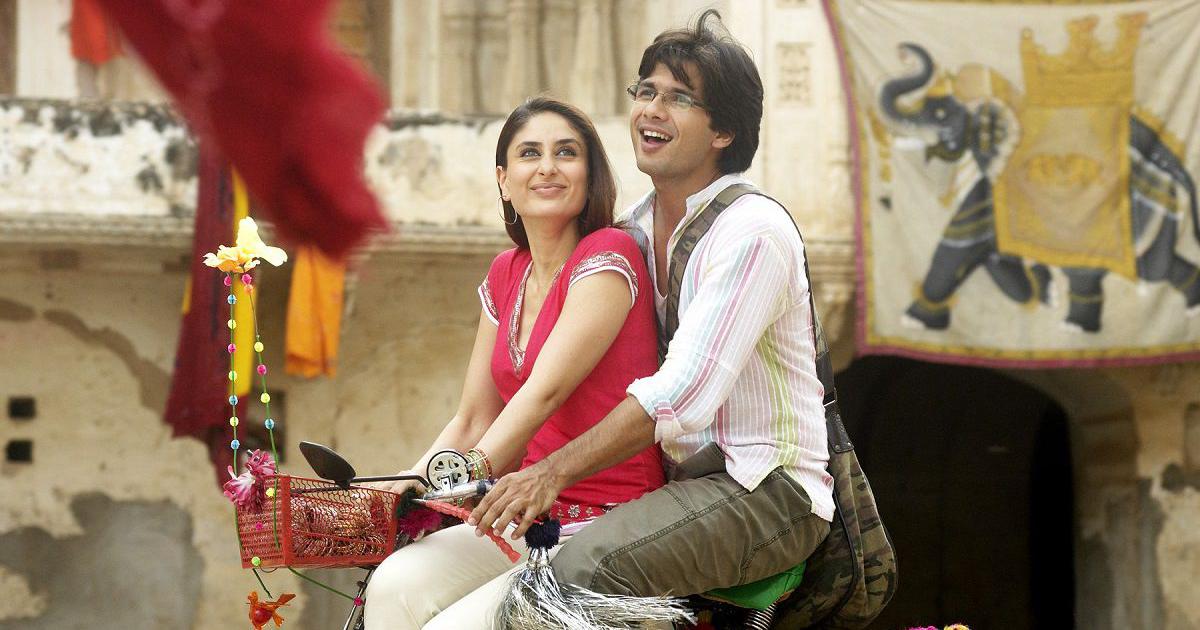
One of the things I love about writing Jab We Met is that the idea of Krishna becoming Radha and Radha becoming Krishna comes through in the script. If you notice, throughout the film, Shahid’s character slowly becomes Kareena’s, and Kareena’s character becomes Shahid’s.
Excerpted with permission from Screenwriters Inc. – 33 Masters on the Art and Craft of Screenwriting, Mihir Chitre, Om Books International.
